Showing posts with label Wedding Traditions. Show all posts

Thursday, November 3, 2011

Tradition Thursday: Groom's Cakes In The South

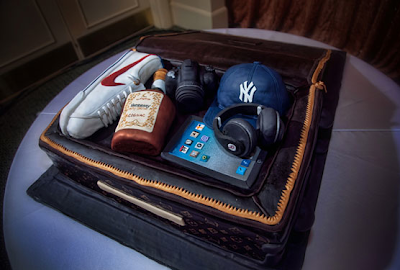
If you've ever seen the movie Steel Magnolias, you know all about the Southern wedding tradition of the groom's cake, here an armadillo full of red velvet cake guts.


Though the groom's cake tradition has been around since the 17th century, it's had a renewal in popularity in recent years, especially in the South. It's a fun excuse to include a more decadent-flavored cake in the celebration and show off one of the groom's hobbies or interests. Look at this groom's cake basketball player Tyrus Thomas had at his recent Louisiana wedding!


And in the South, many still believe in a superstition that single female guests who place a slice of the groom's cake under their pillows will dream of their future husbands!

Thursday, October 20, 2011

Tradition Thursday: Swedish weed bouquets

Nordic Bliss

Keeping with the topic of sustainability and green weddings this week, here's a surprisingly eco-friendly tradition.

In Sweden, many brides continue with an old tradition of carrying a bouquet made of very odorous weeds. The smell of the weeds are said to ward off trolls who are jealous of the couples' happiness and the bouquets eliminate the need for flowers.

Thursday, October 13, 2011

Tradition Thursday: Bhutan's Royal Wedding

Huffington Post

Bhutan's King Jigme Khesar Namgyal Wangchuk, famous for being the youngest king in the world at age 31, was married this morning in a traditional Buddhist ceremony to 21 year-old student and commoner, Jetsun Pema.

Among the traditions that took place in the ceremony was the crowning of the king's bride, formalizing her as Bhutan's new queen. The king descended from a golden throne in the raven crown, which signifies protection, and placed a similar silk brocade crown upon the queen's head.

And as far as the royal fashion, this bride wore a handwoven raw silk gown known as a kiri that took three years to make. The wedding celebrations will continue for three days. Move over Will and Kate!

Thursday, September 29, 2011

Tradition Thursday: Wishing Trees

Wishing trees originated as Dutch wedding custom. Guests write a note for the bride and groom on a paper leaf and hang it on a branch, creating a tree of wishes for good fortune in their future.

The tradition has gained popularity in modern weddings and serves as a fun substitute for the traditional guest book, and this trend could even work for a baby shower or birthday celebration.

Sherman Chu


If you're looking for a customized wishing tree, we'd love to design something just for you! Contact us at info@dbievents.com.

Thursday, September 15, 2011

Tradition Thursday: Wedding Send-Offs

It's Tradition Thursday, and we came across some great ideas for a fun and unique twist on the traditional wedding send-off. Here's to a fabulous grand finale to your wedding celebration!

Jo Photo

Thursday, September 8, 2011

Tradition Thursday: Jumping The Broom

The wedding tradition of jumping the broom is popular in a variety of cultures around the world, from Africa to Europe to the U.S. It signifies the union of the couple, sweeping out the old and entering into a new life together.

Brooms are often customized with ribbon and flowers to match the wedding decor and serve as something the couple can keep after the wedding as a reminder of their vows.

Here's some happy couples jumping into their marriage.

Pink Posh Photography

Thursday, August 25, 2011

Tradition Thursday: Chinese Wedding Tea

Tea ceremonies are one of the most important parts of Chinese weddings, sometimes intimate events with only close family and other times for all wedding guests to watch.

The bride often first serves tea to her parents the morning of the wedding, representing her gratitude to them. Another tea ceremony later takes place in which the bride is formally introduced to the groom's family. Here the bride and groom serve tea to the groom's parents and extended family.


The newlyweds are then given gifts of jewelry or money in red envelopes by the groom's family in return.


Sweet teas are often used to symbolize the sweetness of the marriage and different teas hold different meanings. For example, a tea with lotus seeds and red dates is representative of fertility.


The couple gets to keep the tea set used, and in the future it is passed down to their own daughter for her wedding.

Thursday, August 18, 2011

Tradition Thursday: Wedding Money Dances

Money dances are a popular wedding reception tradition in multiple cultures, where guests give the bride and groom money for their honeymoon or to set up their home.

The Polish money dance tradition, or Pani Mloda, is said to have originated in early 1900s. After the couples' first dance, the wedding guests line up for a chance to dance with the bride and place money in a purse she carries for the dance or an apron she wears over her dress.


In Mexico, relatives pin money to the bride and groom and take turns dancing with them, a chance for the couple to spend a few moments of the reception with family. After the dance, the groom is given an apron and broom, and tossed in the air by his groomsmen while wearing the bride's veil.


In Filipino weddings, guests "rain" good fortune upon the bride and groom by pinning money on them while male guests dance with the bride and female guests dance with the groom.


In Nigerian weddings, special guests at the wedding are "sprayed" with money as a bill is placed on their heads. Because the bride gets "sprayed" so much, someone stands near her with a box to collect the money.

Thursday, July 21, 2011

Tradition Thursday: Wedding Mandaps

We have a gorgeous wedding tradition to share with you today! Wedding mandaps have been a focal point of Hindu weddings since ancient times and the custom continues today.


The bride and groom exchange vows under the sacred mandap. It consists of four pillars forming a covered structure with chairs for the bride and groom, their parents, and a pedestal for a sacred fire.


The structure itself is symbolic, each pillar representing the four vedas(the primary texts of Hinduism), the four goals of a fulfilled Hindu life, as well as the four parents of the couple, who's love and support have allowed the marriage to take place.


The mandap is so important that the day before the wedding, a special ritual takes place to bless it. Though traditional mandaps often contain leaf garlands from mangoes, coconuts and other fruits and traditional fabrics, more modern mandaps reflect the couples' style and are often decorated with bright flowers, contemporary fabrics and crystals.

Project Wedding

Wednesday, July 13, 2011

Tradition Thursday: You May Now Kiss The Bride!

1950s Wedding

The tradition of the wedding kiss originated in Ancient Rome. It sealed the engagement contract and was legally-binding, symbolizing both parties acceptance of the contract. Some say this is where the phrase "sealed with a kiss" came from.

The kiss was so binding that if either the Roman bride or groom died before the actual wedding ceremony, but had already kissed with the engagement contract, the living one got to keep the wedding gifts!

Later in the Church of England, the couple could only after the bride first kissed the minister, a symbol of good luck.

It was also an early Christian belief that the bride and groom swapped souls during the wedding kiss. It is still part of weddings around the world, in many different religious ceremonies, and many continue to consider the kiss to physically unite the couples' souls.

Thursday, July 7, 2011

Tradition Thursday: Symbolic Flowers

Since flowers are what we know best, today we're talking about wedding flower traditions.

In the earliest marriage ceremonies, brides carried garlands of strong smelling herbs and spices to ward off evil spirits. But the tradition of carrying a bouquet has been around since Ancient Rome, where brides carried wheat to symbolize their husband's future prosperity.


In Ancient Greece, they instead carried ivy, symbolic of never-ending love because of the way it grows.


Later in Spain, brides carried bouquets of orange blossoms, which bear both fruit and flowers simultaneously, which they thought symbolized happiness and fertility.

This flower is often also used in Greek Orthodox weddings, where both the bride and groom wear crowns of orange blossoms, the flower's white color symbolizing purity.


By the 18th Century, bouquets were commonplace in weddings, symbolizing the fragility of life, the new life of the couple and purity. These bouquets often contained herbs, especially dill, which was eaten after the wedding ceremony because it was seen as an aphrodisiac.


In Victorian England, people attached very strong meanings to the flowers they used for weddings. Orange blossom headpieces were also extremely important here and part of proper wedding etiquette. If they were out of season, they would even use wax replicas of the flower. Among other flowers used for the bouquet, roses stood for love, daisies for innocence and stephanotis for happiness.


Today, important flower traditions for weddings continue all over the world. In Thailand, both the bride and groom's mothers drape intricate flower garlands over the couple for good fortune.


In the Middle East, the idea of the bitterness and sweetness of life is included in bouquets as the bitter herb artemisia is included with the other flowers.


Maybe next time you're at a wedding full of cultural style, you'll stop to notice all the flower customs that are part of it!

Thursday, June 30, 2011

Tradition Thursday: Wedding Cakes


Wedding cake has become one of the most important aspects of a wedding celebration. But where did the idea of serving these multi-tiered edible works of art begin?

Like many wedding traditions, it came from Ancient Rome, where the groom broke a loaf of barley or wheat bread over his bride's head, representing both his dominance over his new wife and good fortune for the future.

Guests would then gather crumbs, wishing for their own good luck. This eventually led to our modern-day rice and confetti throwing.


In Medieval England, the wedding couple kissed over a tower of sweet buns stacked as high as possible without knocking them over. The French croquembouche tower is said to have evolved from this tradition.


By the late 16oos, "Bride's Pye" was being served in England, a pie filled with a mix of oysters, pine kernels, rooster necks and lamb. Eventually this evolved into a pie of fruit, nuts and meat.

Each guest had to eat a slice or would be considered highly impolite. A ring was also hidden inside the pie and if a single woman found it, she was said to be the next to marry.


The development of a wedding cake most similar to today's form started in the 17th Century, with fruited cakes to symbolize fertility and good fortune.

The bride would eat a bite and throw the rest over her head, again symbolizing good fortune. Then the groom would toss a plate over his head, and if it broke, their future good luck was guaranteed. (Carol Wilson, Wedding Cake: A Slice Of History)

Even today, Kate and William's Royal Wedding cake was made up of multiple fruit cakes as well.

Thursday, June 23, 2011

Tradition Thursday: Always A Bridesmaid


Most modern weddings still include at least a few bridesmaids, and brides are now often letting bridesmaids choose their own, unique dresses (to the relief of bridesmaids)!

But the tradition of the bridesmaid has been around since Roman times. According to Roman Law, ten witnesses had to be present at a wedding ceremony to ward off evil spirits and vengeful suitors present at weddings. They dressed similarly to the bride and groom to cause confusion about who was getting married.


This belief and the practice of wearing similar dresses carried through for centuries, even in Victorian England, where people thought curses could be placed on the couple by their enemies.

Fortunately for the modern bride, she gets to stand out in her own dress!


Thursday, June 16, 2011

Tradition Thursday: 1000 Paper Cranes

Frog Prince Paperie

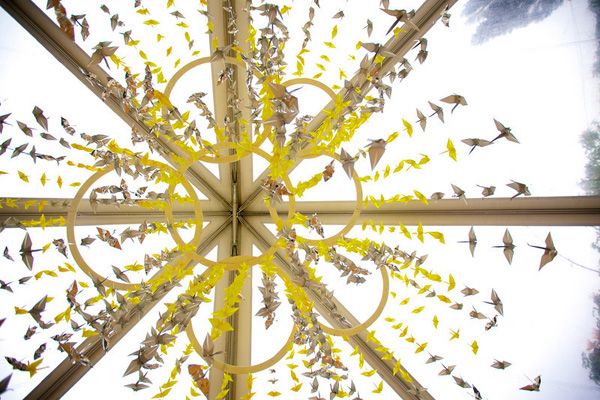
According to an ancient Japanese legend, if someone folds one thousand origami cranes, they will be granted a wish by a crane.

The crane tradition has been part of many Japanese weddings and is becoming popular in modern American weddings as well. If a bride and groom fold the cranes together, it is said they will have a marriage filled with patience and trust. Collections of 1000 paper cranes, known as Senbazuru, are also often given as a wedding gift to wish the couple a thousand years of happiness.

One couple incorporated this by explaining the origin of the crane tradition in their wedding announcements. They included origami paper and instructions for making cranes and their guests sent them back for use in the wedding. The groom, an artist, then created this gorgeous crane installation for the reception.


If you're interested in incorporating the crane tradition in your wedding, origami paper is available in thousands of beautiful colors and patterns to work with your color palette. See this tutorial to learn how to make paper cranes.


Tuesday, June 7, 2011

Tradition Thursday

Ever been curious about how the tradition of decorating the newlyweds' car started?

In Tudor England, old shoes were actually thrown at the bride and groom's carriage! If any of them hit the moving carriage, it symbolized good luck for the future. (World Wedding Traditions)

Here's where our more modern idea of tying shoes to, or just simply decorating the couple's getaway car, originated from.

What could be more festive than a gorgeous vintage car decorated for the newlyweds to drive off in?